
Knowledge: Evidence and Proofs
Evidential Arguments and Logical Proofs make a tricky dancing pair

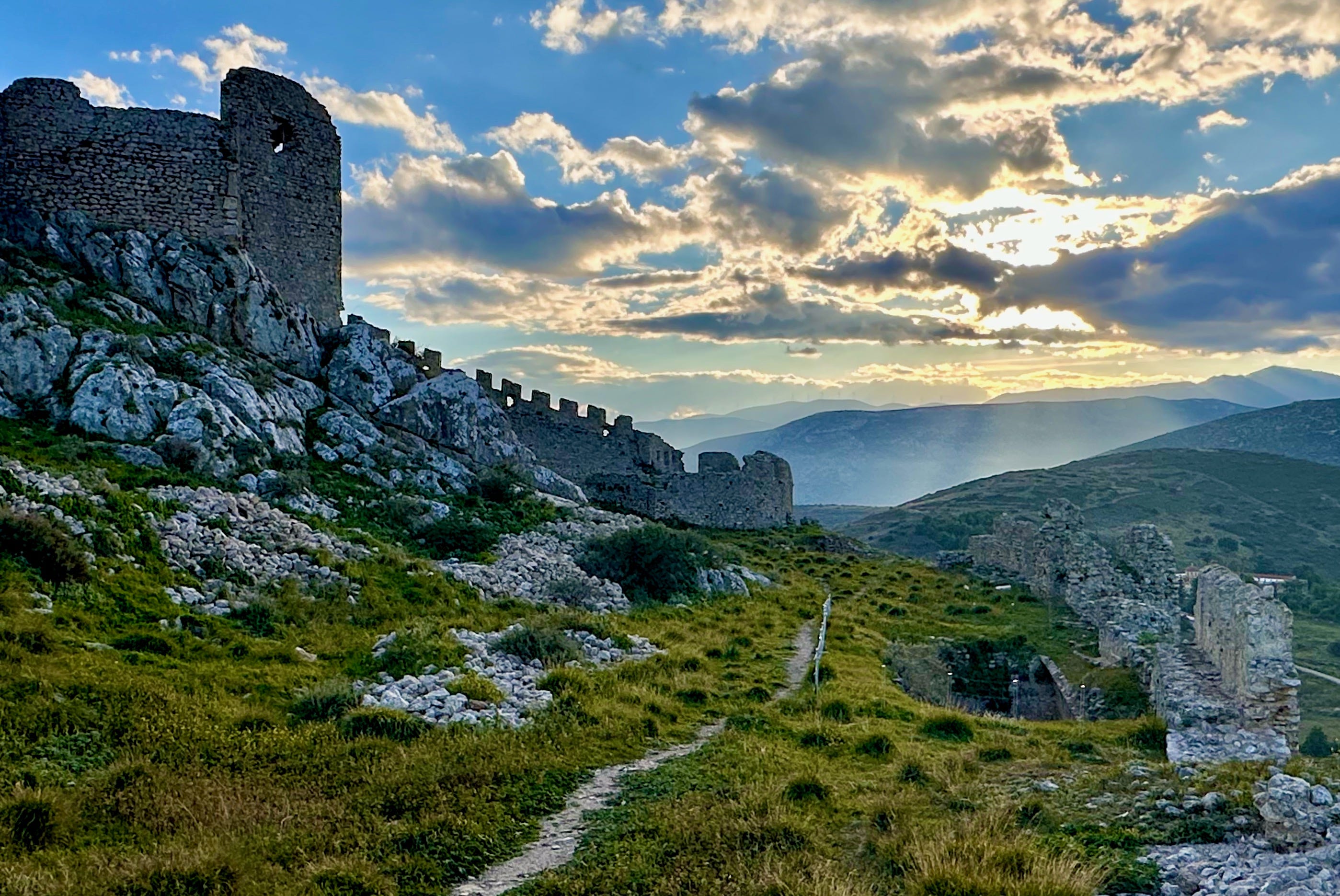
Logical Evidence.
To capture knowledge on a walk is to capture a cloud within a thought. Here is the proposition: The paths and maps of knowledge come in separate threads; the warp and weft of reasoning. One is the sandy path of evidential arguments for connections between measured senses and reactions—the latter path: stepping stones of proofs.
We will start the journey as the day itself begins: a clear sky and sunrise portend a warm and sunny day. It's an evidential argument that connects the two as it will connect the sunset with crickets, the humid coastal feel with warm fronts and light showers, or tall dark clouds in the sky with a storm-filled cold front soon to come. To all of these, there will be some exceptions to the connections. Some might argue that evidence or logic is the best. Do you claim one as your own? Debates are often a jousting of the two. However, as to this walk, the proposition is that there are parts of life that will always reside in the evidential sphere. It's that reason itself that lets us know it's not possible to gather all the data needed to anticipate the future beyond a crude guess. Will the butterflies' wandering this dawn morning change the wind's path within a week?
To the world of proofs, reason, and logic, it's not primarily a world of analog measurements of light, sound, touch, or other senses of the world beyond the mind. They live within, communicated by precise language smuggled in and out, like words captured on the tip of one's tongue. The rules of logic need just a seed or two to sprout. To hold two apples, add another, or give one away, and cut one in half. These collections need new names. Rules to make these compound names work just as well for peaches in the hand or stones from the riverbed. Logic builds tier by tier, from things held to walking down the stepping stones. Four forward, three to the right. Turn about and walk back to the start; five steps will get you there. Yet, to reason about walking diagonally back across a simple square breaks the mind at first. It's real - you can clearly walk it - yet the rules for creating names no longer work as easily as before. Within this garden of the mind, words for algebra, calculus, and tensors will soon grow. Even the seemingly imaginary is real, just lying on its side. This pyramid of perfected rules, standing on its tip, sketches out the universe, yet it is silent to what flower might bring joy to a friend's soul.
Alas, the challenge is that these two worlds overlap a fair amount, but to the explorer, not as much as one might think. To walk and share words as we amble through this mixed garden is a daily part of life. Some paths welcome evidence, some demand proof, many entertain both. The boundary of these partitions can catch you by surprise. It is reasonable to expect that walking by one map alone will let you peer upon places your map cannot take you. Even these printed words, as colorful as they aim to be, are discrete characters composed of pixels, elegantly rendered with precision on a screen. Yet the words, inanimate though they be, hope to inspire a logical proof for the daily presence of evidential arguments. If this trail makes sense to you, you will know that more words will not further refine the thought; they will only further beat a well-worn path.
May your day know joy, my friend.
Q.E.D., S.D.G.
This morning, I set out to work on my paper for my APOL 6323 apologetics class. As I watched a recorded debate and saw two learned fellows dance around their position without naming the challenge they faced. It's not likely they would have changed their position. Yet to the audience, could they see why the duel would never end? That itself is a lesson to learn. This prose has been stuck in my mind since coffee with Danny yesterday. The video just fueled it more. I hope that now that it's written, I can pick up on the other. ;)
Do you think one map can cover it all?
Are evidence and logic truly distinct?
Can the masquerade to an extent?
What happens when the charade goes too far?